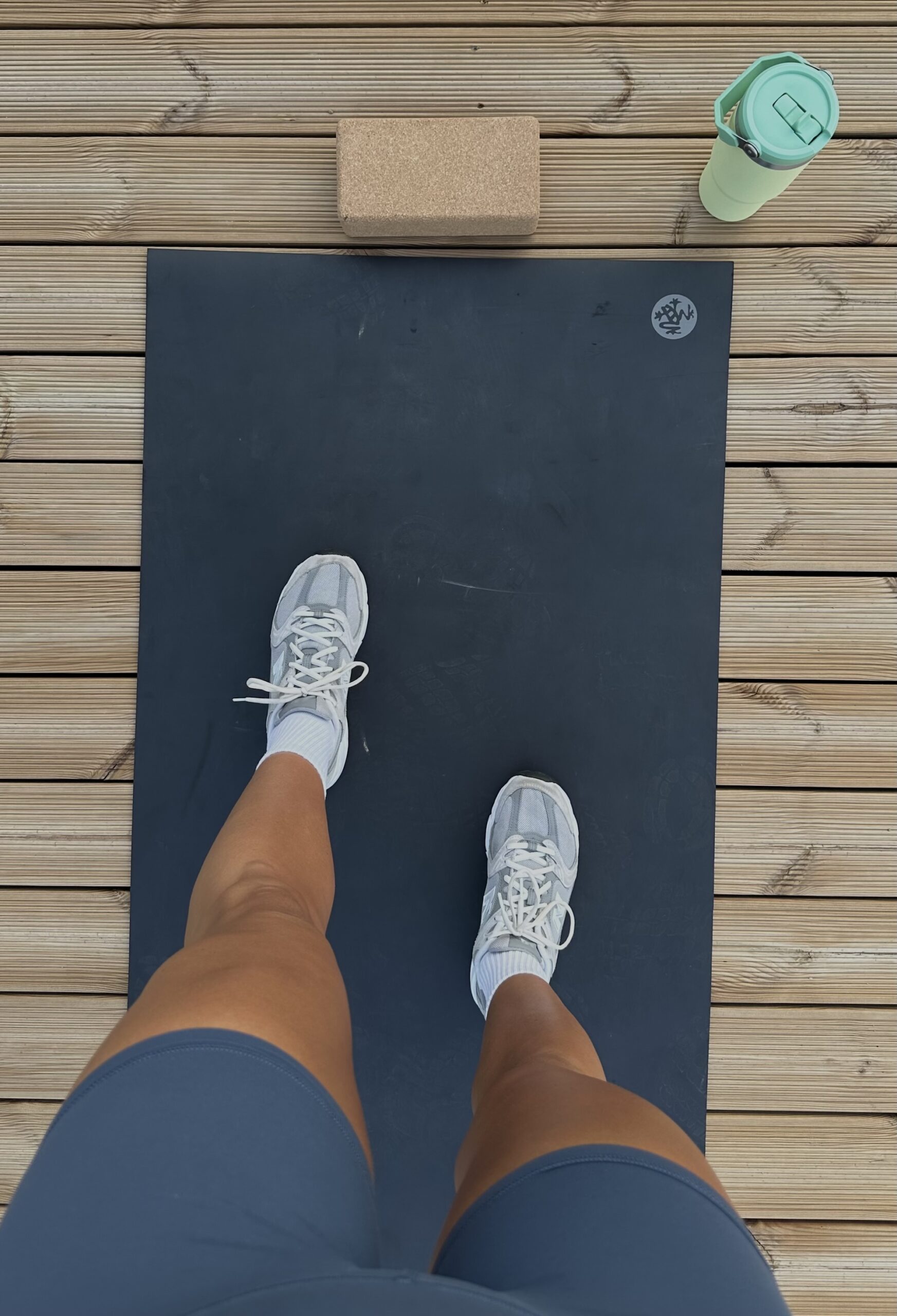
I spent about three years waiting to “feel ready.” Not ready for anything dramatic, just ready to start again after a period where I had quietly let a lot of things slide. I kept telling myself I needed a clear head, a fresh week, a sign that the timing was right. What I actually needed was to stop treating a restart like it required a ceremony.
The idea that beginning again requires a moment
There is something deeply appealing about the clean start. January 1st, a birthday, Monday morning, the first of the month. These feel like permission slips. But what I noticed, after enough years of waiting for them, is that the “right moment” was mostly doing the work of keeping me still. It felt like forward motion because I was planning. It wasn’t.
The version of me who finally got moving did not do it on a significant date. It was a Wednesday in March. I had not slept great, nothing had resolved, and I just did one small thing differently than I had been doing it. That was it. No fanfare, no breakthrough, no clarity that arrived like a thunderclap. Just a slightly different Wednesday.
Why we hold out for the breakthrough
Part of it is that breakthroughs make good stories. We hear about the moment someone hit rock bottom, or had a revelation, or decided enough was enough. Those stories are real. But they are the version people tell after the fact, shaped into a narrative with a turning point. Most actual change does not feel like that while it is happening.
The other part is that waiting for a breakthrough protects you from failing. If you haven’t really started yet, you haven’t really failed yet. I did this for longer than I want to admit. Kept the attempt theoretical, kept the goal abstract, so the gap between where I was and where I wanted to be never had to be measured directly.
What a small start actually feels like
Honestly, anticlimactic. The first time I picked up a habit I had dropped for two years, it felt like almost nothing. A little awkward, slightly unfamiliar, mildly discouraging because I had clearly lost ground. There was no surge of motivation. There was just the slightly uncomfortable fact of having done it once, which made it a little easier to do it again the next day.
That is the part nobody explains well. Momentum does not precede action. It follows it. You do not wait until you feel motivated and then begin. You begin, and then somewhere after the third or fourth repetition, something starts to shift. The doing creates the feeling, not the other way around.
Starting small without it feeling pointless
The risk with “start small” advice is that it sounds patronizing, or like a consolation prize for people who can’t manage a real effort. But small is a design choice, not a limitation. When I stopped framing small starts as lesser starts, they became a lot easier to actually take.
One thing that genuinely changed how I approached this was separating the identity from the action. Instead of telling myself I was becoming someone who did a particular thing, I just did the thing. No story attached. No commitment to a new version of myself. That took the pressure down considerably, and it also meant there was nothing to protect if I skipped a day. I wasn’t abandoning an identity. I had just missed a day and could pick it up again.
The specific thing that helped more than anything else
Making the next start as frictionless as possible. Not motivating myself more, not building accountability systems, not journaling about my intentions. Just reducing the distance between where I was sitting and the first action. I figured out what the tiniest possible version of the thing looked like, and I made that the entry point every time.
If I had dropped a writing habit, the entry point wasn’t “write something meaningful.” It was open the document. That’s it. Open the document and sit there for two minutes. Sometimes that led to more, sometimes it didn’t, but the two-minute version was always achievable, and that meant I always had somewhere to start from.
The thing I would add here, which took me a while to figure out, is that environment matters more than willpower. If the thing you want to start requires you to go find materials, set something up, or remember where you left off, you will skip it more often than you do it. Put the book on the pillow. Leave the notebook open on the desk. Make the path from “sitting still” to “doing the thing” as short as physically possible.
When you have tried to start again and stopped before
This is the part that trips people up most. If you have started and stopped several times, the next attempt carries the weight of all the previous ones. It does not feel like a fresh start. It feels like another attempt that will probably go the same way.
What helped me was dropping the framing of “trying again” entirely. Each time I picked something back up, I tried to treat it as just doing the thing today, with no implied relationship to the previous attempts. That is easier said than done, but the mental shift of removing the track record from the picture changed how much pressure each attempt felt like it held.
Where I am now is a lot less dramatic than I once hoped it would be. No breakthrough ever came. The things I do consistently now started on unremarkable days, in low-energy moments, without any particular sign that it was the right time. That is a good thing. It means I can start again whenever I want, not just when conditions align.