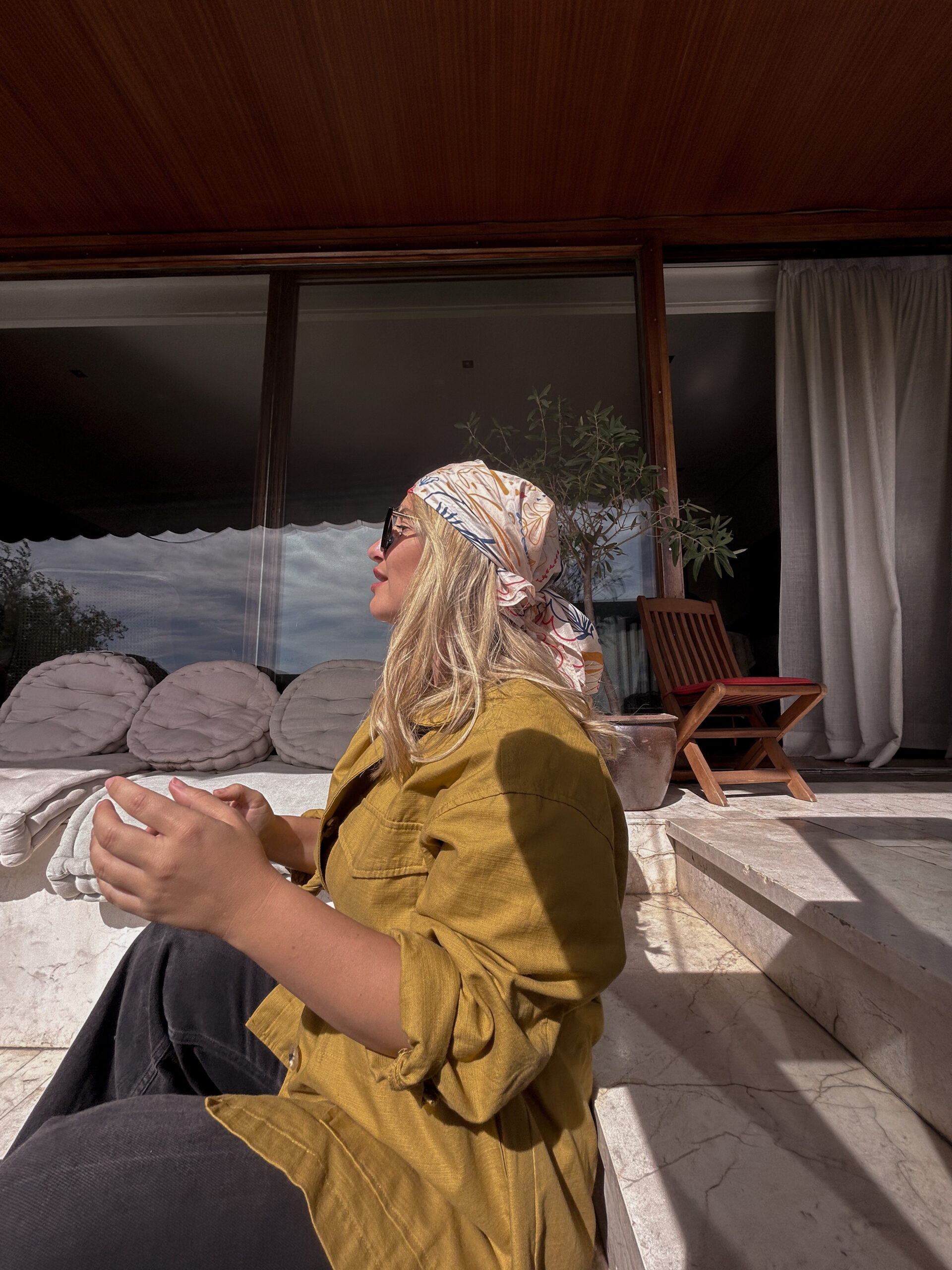
Last September I was somewhere in Portugal, sitting on a stone wall outside a bakery with coffee going cold in my hand, and I realized I had no idea what day it was. Not in a romantic, carefree way. In a genuinely disoriented way that made the rest of that afternoon feel like I was watching it through a window. I had been moving fast, checking things off, photographing everything. And I had completely lost the thread of where I actually was.
That was the trip that changed how I travel. Not the destinations, not the packing list. Just one habit I started building in after that afternoon, and I have kept it going through every trip since.
What the habit actually is
Every evening, usually before dinner or right when I get back to wherever I am staying, I write three sentences in a small notebook. Just three. One about something I noticed with my senses, one about something that surprised me, and one about how I felt at some specific moment in the day. That is the whole practice. It takes about four minutes.
I want to be clear that this is not journaling in the way most people picture it. There is no stream of consciousness, no pressure to capture everything, no pretty pages with pressed flowers. It is deliberately minimal because I tried the longer version for years and kept abandoning it by day three of any trip.
Why three sentences works when longer journaling does not
The constraint is the point. When I only have to write three sentences, I have to choose. Choosing forces me to actually think about what happened, rather than just narrating a timeline of activities. That act of choosing is where the grounding happens.
Before I landed on three sentences, I used to try to write full entries and would end up with two overstuffed pages about the first day, then nothing for the rest of the trip because I had fallen behind and the task felt too big. The three sentence format stays manageable even when you are exhausted after a long day of travel, which is most days.

The specific prompts I use
The sensory sentence is the one that does the most work for me. Something I smelled, heard, or felt underfoot. The sound of a specific market, the feeling of old cobblestones through thin soles. Sensory details anchor a memory to a real place better than any photo I have ever taken.
The surprise sentence keeps me honest about what the place is actually like versus what I expected it to be. Some of my best surprises have been small and unsexy. The bread was darker than I expected. The city was quieter than I thought. These sentences have taught me more about my own assumptions than anything else.
The feeling sentence is the one I used to skip, thinking it was too soft to bother with. Now it is the one I reread most. Knowing that on a specific Tuesday afternoon in Lisbon I felt genuinely content for the first time in months is more useful information about that trip than any itinerary detail.
What to write in and where to keep it
The notebook matters more than I expected it to. For two years I used whatever was around, random scraps and the notes app on my phone, and the writing felt disposable. When I started using a dedicated small notebook that I keep only for travel, the habit stuck differently. There is something about the physical object that signals to my brain that this time is set aside.
Mine fits in a back pocket, which means I always have it when I am sitting somewhere waiting. Waiting for food, waiting for a bus, sitting in a square doing nothing. Those idle moments are actually perfect for jotting the sentences down mid-day, which I have started doing more than the evening version. Capturing something right after it happens produces sharper, stranger details than trying to reconstruct it later.
One thing I figured out the hard way: date every entry with the day of the week, not just the number. “Monday” tells me something. “The 14th” tells me nothing when I come back to it months later.
What this habit does over time
After a few trips, the notebook becomes a real record of who you were in a place. Not a travel log. A record of your attention. I can go back to a trip from three years ago and land directly inside a specific afternoon because of three sentences. That is not something I can do with photos, which tend to all blur together in the camera roll.
The other thing that has happened, which I did not anticipate at all, is that the habit has made me slower during the day. Knowing I will have to write one true sensory detail in the evening means I am paying attention to sensory details all day. I notice more. I linger a little longer in places that feel interesting. The writing does not just record the trip, it shapes how I move through it.
I still move fast when I travel. I still overbook days and underestimate distances. But I have not lost the thread again since Portugal, and that feels like enough.