I had a moment a few years ago where I started crying in the middle of a grocery store because they were out of the pasta sauce I like. That was not about pasta sauce. I knew that. But I stood there, staring at the shelf, and felt something crack open that had been sealed tight for months. I had been so busy managing life that I had not actually processed any of it, and it had all just been sitting there, quietly building pressure.
Working through your emotional backlog, meaning the accumulated feelings you have shelved, suppressed, or simply never had time to feel, is not a dramatic one-session breakdown. It is slow, unglamorous work that happens in small doses. I have been doing it deliberately for years now, and I have learned what actually helps and what just keeps you busy without doing much.
Why the backlog builds in the first place
Most of us were not taught to process emotions in real time. We were taught to hold it together, move on, be strong. So we get into the habit of filing feelings away under “I’ll deal with that later.” The problem is that later rarely comes, and the pile grows. By the time you feel it, you often cannot even identify what you are actually feeling or where it came from.
I spent years thinking I was fine because I was functional. I went to work, made dinner, laughed with friends. But I had this low-level tension that never fully lifted. When I finally sat down and started pulling at the threads, I found grief from a friendship that had ended badly, anger from a job I had stayed in too long, and sadness about a version of my life I had let go of without ever acknowledging it. None of it was dramatic. All of it was real.
How to actually start
The biggest mistake I made early on was trying to process everything at once. I would sit down with a journal and try to excavate my entire emotional history in an afternoon. That does not work. It just floods you and then you avoid it for another six months.
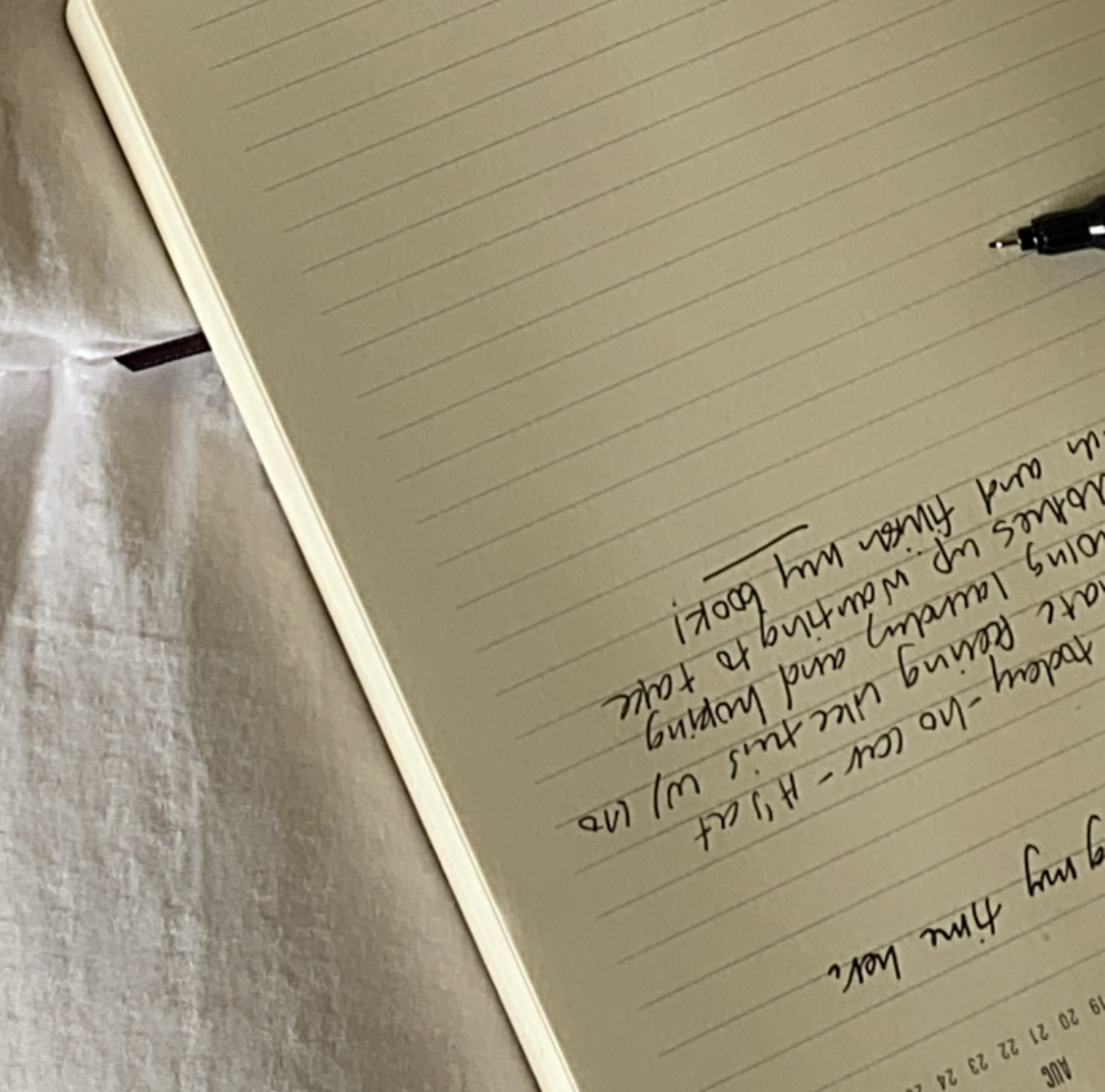
What works is short, regular sessions. I do fifteen minutes, most mornings, with a notebook and a cup of coffee before anyone else is awake. The quiet matters. I am not trying to solve anything or reach any conclusion. I am just asking myself what is sitting just underneath the surface and writing down whatever comes up without editing it.
Writing without a prompt
For the first few months I tried using journal prompts, and they always felt forced. The questions would point me somewhere specific when the thing I actually needed to feel was somewhere completely different. I switched to just writing the first sentence that came to mind, even if it was “I don’t know what to write,” and following wherever it went.
Some mornings nothing interesting surfaces and I write about being tired. Other mornings something comes up that surprises me completely, an old resentment I thought I had let go, or a fear I had been pretending was not there. The practice is not about producing insight every time. It is about keeping the channel open so things can move through instead of staying stuck.
Feeling it in your body, not just your head
This sounds abstract but it changed everything for me. Emotions are not just mental events. They live in your chest, your throat, your stomach. When something comes up in writing, I try to stop and notice where I feel it physically. I sit with that sensation for a minute or two without trying to explain it or fix it.
I started doing this because a therapist suggested it and I thought it sounded pointless. Turns out, a lot of backlogged emotion gets stuck because we process it intellectually and skip the physical release entirely. Just locating the feeling in your body and breathing into it, without rushing past it, actually does something. I cannot fully explain why, but my chest has literally loosened during these moments in a way that thinking harder never managed.
What to do when something heavy comes up
Some of what is in the backlog is genuinely hard. Grief, old wounds, things that felt unfair and still do. When that surfaces, my instinct used to be to close the notebook and make tea and think about something else. That is avoidance, and the feeling goes right back on the pile.
What I do now is stay with it for just a little longer than is comfortable. Not until I am overwhelmed, but past the first urge to escape. Sometimes that looks like sitting quietly for five minutes. Sometimes it looks like calling someone I trust and saying “something came up and I just need to say it out loud.” Saying a feeling out loud to another person, even once, moves it differently than keeping it on the page. It becomes real in a different way.
One thing I never expected to matter as much as it does: movement. When I am processing something that has been stuck for a long time, a walk helps more than almost anything else. Not a meditative silence walk, just walking. The rhythm does something. Emotion that felt immovable in a chair tends to shift on a thirty-minute walk in a way I stopped questioning a long time ago.
The backlog does not empty all at once, and I am not sure mine ever will completely. But it gets lighter. The low-level tension I used to carry as a baseline has largely lifted, and when something hard happens now, I feel it closer to when it actually happens instead of carrying it silently for a year. That is the real difference, not some finished state, just a little less weight.