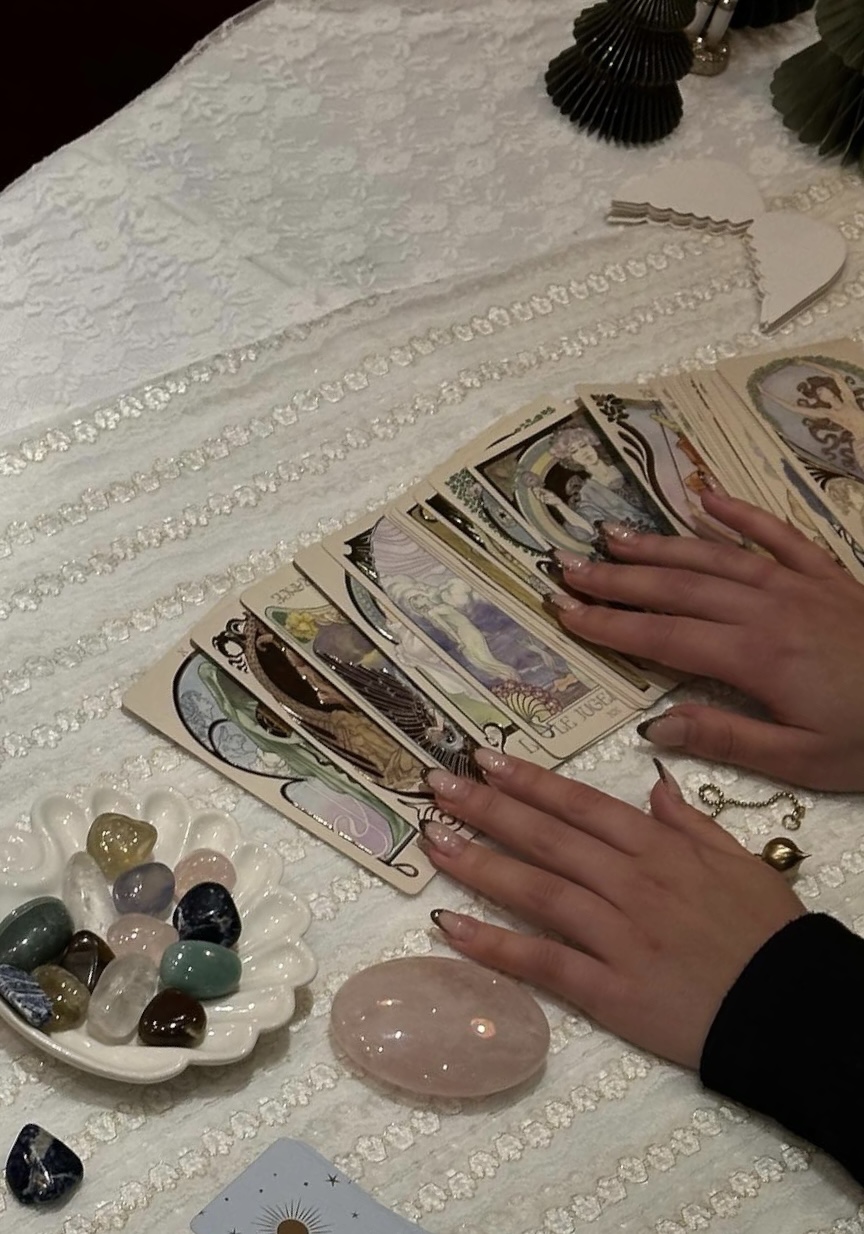
My first hundred or so three-card spreads all looked the same. Past, present, future, every single time. I did it because that was the default position in every beginner book I read, and it worked well enough that I never questioned it.
Then I hit a wall.
The cards started feeling repetitive, like I was asking the same question in slightly different ways and getting the same non-answers back. It took me an embarrassingly long time to realize the spread was not the problem. The framework I was pouring it into was.
Why past, present, future gets stale
The past, present, future structure is not bad. It just carries a lot of assumptions about what kind of answer you need. It assumes the situation is moving in a linear direction. It assumes the past is relevant to this particular question. Plenty of readings benefit from a completely different frame, and once I started experimenting, I noticed the cards felt sharper. More specific. The same deck, totally different signal.
Three positions are actually a lot of real estate. That is enough room to build a meaningful lens on almost any question. The mistake most people make, including me for a long time, is treating those three slots as if they only have one possible meaning.
Spreads I reach for instead
These are the ones that replaced past, present, future in my regular rotation. They are not exotic or complicated. They are just more honest about what I am actually trying to figure out.
Situation, obstacle, advice
This is the spread I use more than any other right now. Position one reads what is actually happening, not what led to it. Position two names the thing getting in the way, whether that is internal resistance, external circumstance, or a pattern I keep repeating. Position three is not a prediction. It is the card telling me what to do next.
What I like about this structure is that it stays useful even when I do not have a burning question. Sometimes I just need a gut check on a situation, and this gives me something concrete. The advice position in particular tends to produce cards that feel direct in a way the future position rarely did for me.
What I know, what I am missing, what to watch
I started using this one when I felt like I was going in circles on a decision. The first card reflects what I already understand about the situation. Pulling something I recognize there is actually reassuring. It confirms the reading is landing in the right place. The second card is the gap, the thing I have not considered or am deliberately avoiding looking at. The third card is not a future prediction, it is more like a signal to keep my attention on, something that will matter even if I do not fully understand it yet.
This spread has a way of surfacing the uncomfortable stuff in the middle position. A few times I have pulled something there and immediately known it was right and had been ignoring it. That is the reading doing its job.
Mind, body, spirit
This one gets dismissed as too simple, but I find it genuinely useful for days when something feels off and I cannot name it. Three positions, each pointed at a different layer of what I am experiencing. I do not use this for decisions or external situations. It is purely a check-in, especially useful when I am stressed or running on fumes and need to be honest with myself about where the friction actually lives.
The key is not trying to force a narrative between the three cards. Let each one speak to its own position without tying them together into a story. Sometimes they will connect on their own, and sometimes they will point in completely different directions. Both outcomes are useful information.
What to keep, what to release, what to invite in
This is the one I pull out most around transitions. Anything involving change, a new season, an ending, a shift in how I am spending my time. The first position is not about clinging. It is about recognizing what is actually serving me right now and should come with me. The second is honest about what I need to stop carrying. The third is not a wish list. It is an opening, something I can make room for if I stop filling the space with the stuff the second card just named.
This spread works best when you sit with the second card for a while before moving to the third. Rushing to the invitation before you have actually looked at what to release tends to flatten the whole thing.
How to build your own three-card structure
The most useful thing I learned about three-card spreads is that the positions should answer a single coherent question together, not three separate questions. If you cannot explain how the three positions relate to each other in one sentence, the spread will feel scattered.
Write the three positions down before you pull any cards. Seriously, write them. Having the frame in front of you keeps the reading from drifting back into whatever default interpretation feels easiest in the moment, which is usually some version of past, present, future dressed up as something else.
One thing that made a real difference for me was keeping a reading log, not elaborate journaling, just a note of the spread frame I used, the three cards, and one sentence on what stood out. After a few months I could see which structures were consistently producing readings that felt accurate and useful and which ones I kept fudging to make them work. That feedback loop is worth more than any book on the subject.
Three-card spreads are probably my most-used format at this point, and I rarely feel like they are limiting. There is usually a structure that fits the question better than any other, and finding it has become part of the reading itself. I am still adding new frames occasionally, and probably will be for as long as I keep doing this.