I got obsessed with Ajatar about three years ago, when I was deep into researching forest spirits across European traditions and kept running into her name in footnotes like she was too strange to discuss directly. Once I actually pulled on that thread, I could not stop. She is one of the most unsettling figures in Finnish mythology, and almost nobody outside of folklore scholarship talks about her.
Who Ajatar actually is
Ajatar is a female spirit from Finnish and Karelian folk belief, closely tied to the forests of the north. She is sometimes described as a dragon, sometimes as a snake-like creature, and sometimes as a shape-shifting woman. The name itself is thought to connect to a root meaning “to drive away” or “to chase,” which fits her character perfectly. She does not invite. She pursues.
What separates her from a generic forest spirit is the disease element. Ajatar was specifically blamed for spreading plague and sickness. People believed that anyone who encountered her in the forest could return home carrying illness without even knowing it. She did not need to attack you. Proximity was enough.
Her relationship with the devil and serpents
Finnish folklore gives Ajatar a disturbing family structure. In some accounts, she nurses serpents in the forest, feeding them from her own body. Those serpents were considered carriers of her plague-spreading power. The devil himself is sometimes described as her son in certain regional tellings, which places her in an unusually high position in the hierarchy of evil beings in Finnish folk cosmology.
That connection to the devil is worth sitting with. In a tradition where the devil is already a significant force, Ajatar being his mother gives her a kind of primordial status. She predates the corruption she produces. She is the source, not a symptom of it.
The dragon label and what it actually means
Calling Ajatar a dragon is a translation choice that carries some baggage. The Finnish and Karelian tradition does not picture her breathing fire or hoarding gold. Her dragon quality is more serpentine and atmospheric. She is vast, cold, and associated with wild places where humans do not belong. The dragon label probably comes from the way later scholars tried to map her onto more familiar European categories.
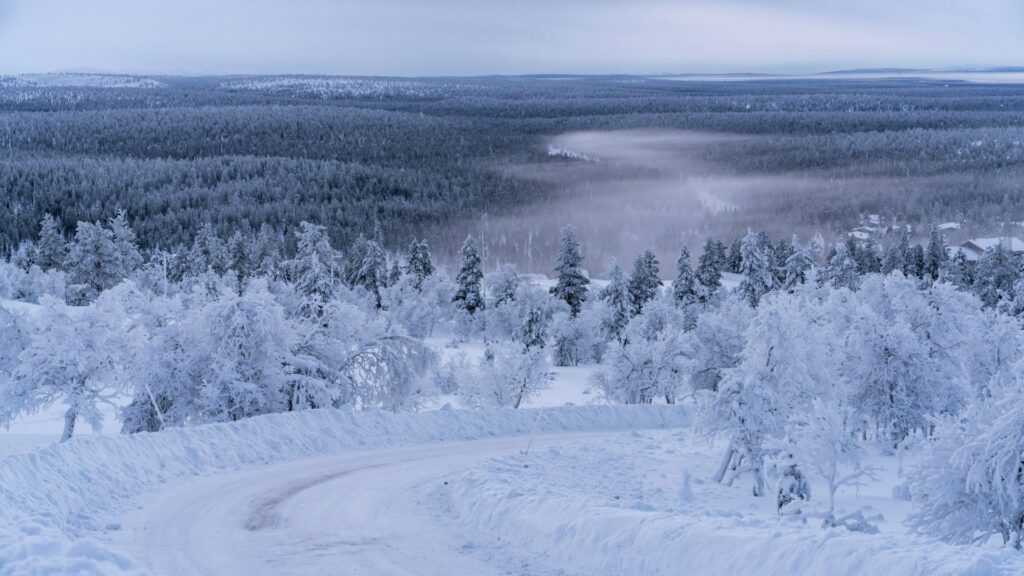
What the dragon framing does get right is her scale. Ajatar is not a minor household spirit or a localized river creature. She belongs to the deep forest, which in Finnish cosmology is genuinely another world. The forest in these traditions is not scenic. It is the edge of the knowable, and Ajatar lives well past that edge.
Why disease and the forest go together in this tradition
To a modern reader, pairing a forest spirit with epidemic illness might seem like a strange combination. In Finnish folk belief, it makes complete sense. The forest was a place you entered carefully and left quickly. It was the source of game and timber, yes, but also of things that could not be explained. Illness that spread through a village with no obvious cause was the kind of thing that needed an origin story, and Ajatar provided one.
There is also something practically accurate embedded in this belief. Forests historically harbored insects, animals, and conditions that did spread disease. The folk explanation personified something real, even if the mechanism was wrong. That pattern shows up across a lot of European plague mythology, where the source of sickness is always a figure who exists outside of human settlement and human control.
How communities responded to her
Protective measures against Ajatar were tied to the broader Finnish tradition of forest ritual. You did not enter the deep forest without some acknowledgment of the powers there. Offerings, specific words, behavioral rules about noise and conduct, all of these were part of managing the relationship between the human world and what lived beyond it. Ajatar was part of why those protocols mattered.
One detail I find genuinely interesting is that the fear of Ajatar was not just individual. It was communal. If one person came back from the forest sick or strange, the concern was for everyone they had contact with. That communal dimension of the belief maps onto how epidemic disease actually spreads, which makes it one of those folklore elements that feels less like superstition and more like collective memory.
Her place in the broader Finnish spirit world
Finnish mythology has an incredibly dense ecosystem of spirits, from the household haltija to the forest king Tapio and his wife Mielikki. Ajatar sits outside that system in a way that is telling. Tapio and Mielikki are spirits you can negotiate with. They have moods and preferences and can be appealed to with the right respect and offerings. Ajatar is not described that way. She is not a being you petition. She is a condition you try to avoid.
That distinction matters for understanding how Finnish folk belief handled the idea of malevolent power. Most spirits in the tradition operate on a kind of reciprocity. Ajatar does not. She occupies the space in the mythology reserved for things that are simply dangerous, without remedy or relationship.
She has stayed with me as a figure because she captures something honest about how people have always thought about wild places and invisible illness. She is not a villain with a motive. She is an environment made flesh, and that is a much harder thing to argue with.